
Every real estate closing depends on money moving to the right place, at the right time, without being intercepted along the way. Wire transfer verification helps confirm that payment instructions and account information are accurate and legitimate before funds are sent. Historically, that process has often relied on phone calls, emails, and manual checks.
Those methods can create both operational friction and security gaps. Manual verification takes staff time, introduces room for human error, and can make it harder to keep up as fraud tactics become more convincing.
What is wire transfer verification in real estate?
Wire transfer verification is the process of confirming that wire instructions and account information are accurate and legitimate before funds are sent in a real estate transaction.
The goal is straightforward: make sure money is being directed to the intended account using information that has been independently verified, reducing the risk of fraud, human error, or misdirected funds.
Wire transfer verification can work alongside other fraud-prevention controls, including identity verification and payoff verification. Together, these safeguards help title and settlement teams confirm both who they are working with and where transaction funds are going before money moves.
How do title companies typically verify wire transfers?
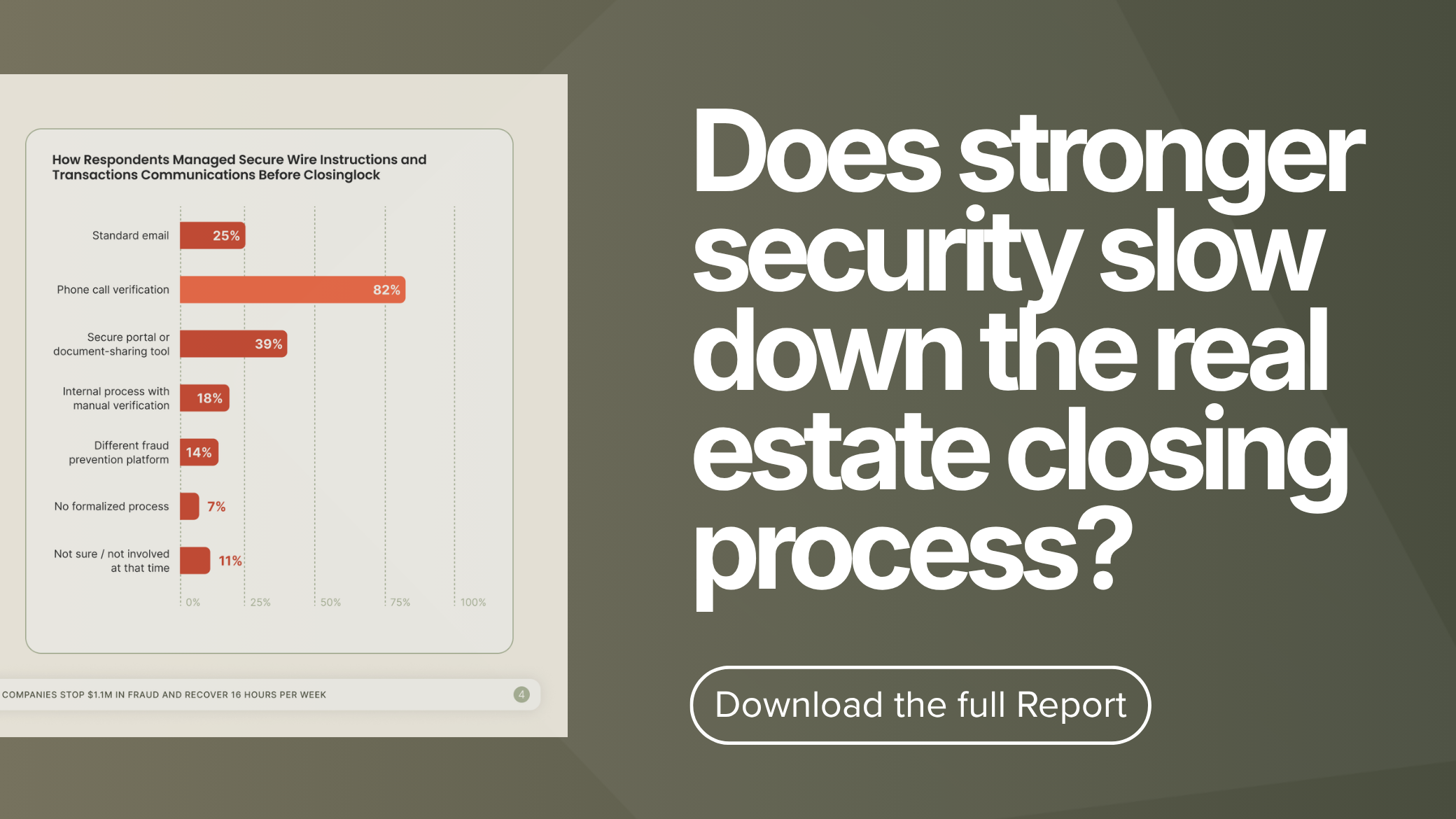
Before adopting Closinglock, many respondents relied on manual methods to verify wire information. In Closinglock’s ROI research, 82% said phone call verification was part of their process, while 25% relied on standard email.
These methods can create different risks and operational challenges. Standard email can be vulnerable to business email compromise, while phone verification can be susceptible to spoofing and impersonation. When verification also happens across separate systems, employees may have to move between tools to verify information and coordinate funds, adding more manual work to the closing process.
78% of respondents say their clients ask directly how their funds are protected.
Is phone verification enough to prevent wire fraud?
Not on its own — phone verification can be a useful layer of protection, but relying on it as the only safeguard can leave gaps as impersonation tactics become more sophisticated. Cloned voices, spoofed caller ID, and AI-generated impersonation have made it possible to convincingly imitate a real party to a transaction with very little effort.
Melissa Neesen, VP of Operations at Reliable Title, described how quickly this has changed: “We know there are situations now where fraudsters can use AI to overlay an image… We’re human, and we can’t always detect everything.”
That doesn’t mean phone verification has no place in the process, it means it shouldn’t be the only layer of defense
How can title companies make wire verification more efficient and secure?
Title companies can make wire verification more efficient and secure by reducing manual handoffs, centralizing sensitive information, and building verification into the closing workflow rather than treating it as a separate task.
That can mean securely exchanging wire instructions instead of relying on email, verifying account information through trusted sources, and using identity verification alongside payment controls to add layers of protection before funds move.
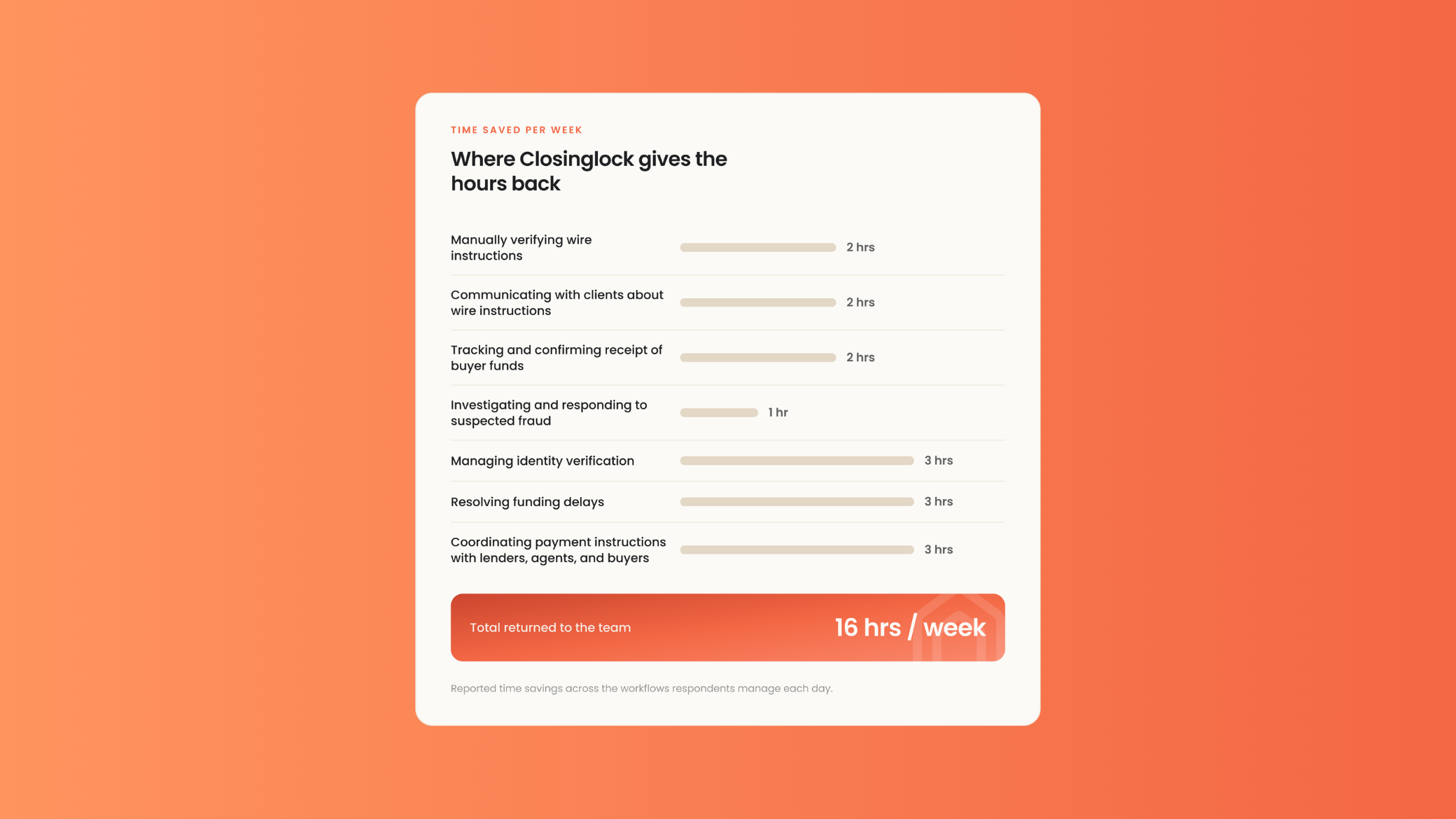
The operational benefit is fewer repetitive calls, emails, and manual checks for closing teams. In Closinglock’s ROI research, customers reported saving 16+ hours of work every week across tasks, including wire instruction verification, client communication, identity verification, funding delays, and payment coordination.
Kalynn Rose, Software Administrator and Trainer at Olympic Peninsula Title, described the impact: “We used to have four different people completing different things. With Closinglock, I can just have one person and an automation handle it.”
For title teams, that time back creates additional capacity for the work that actually requires their attention.
Manual wire verification isn’t a problem because closing teams aren’t careful. The challenge is that phone calls, email, and disconnected processes require repeated manual work while fraud tactics continue to evolve. Moving more of that verification into a secure, connected workflow can reduce the administrative burden while strengthening how critical information is handled.
But the time teams spend on manual verification is only one part of the operational impact. Closinglock’s new ROI research looks at what changes when title, settlement, and real estate law firms reduce manual work across the closing process, including the impact on capacity, transaction speed, fraud exposure, and the broader business.
See the full business impact in What protection is worth: The ROI of Closinglock