
Wire fraud in real estate rarely feels urgent until it happens. Most closing teams have heard the warnings, sent the disclosures, and had the conversation about protecting wire instructions. But the risk can still feel abstract—a rare, worst-case scenario rather than something built into the everyday closing process.
Closinglock’s new ROI research makes the financial exposure more tangible. Closinglock customers report stopping an average of three suspected or attempted fraud incidents every year. Based on the average transaction value reported by respondents, those incidents involve up to $1.1 million in transaction funds annually.
The more useful question isn’t whether fraud exists. Title and settlement professionals already know that. It’s what a successful fraud attempt could cost, and what preventing one can protect.
How common are wire fraud attempts in real estate?
Among Closinglock customers surveyed, respondents reported stopping an average of three suspected or attempted fraud incidents per year, with an average transaction value of nearly $370,000.
Not every attempt would have resulted in a loss, some may have been caught regardless. But each one represents real exposure: a transaction where suspected fraud was identified before funds moved. Fraud risk can take different forms throughout a closing, including impersonation, manipulated payment information, fraudulent payoff details, and attempts to redirect funds.
Ninety percent of respondents said they’re very or extremely concerned about the risk of real estate fraud, and 82% said that concern has grown over the past five years — showing how seriously closing teams are treating the issue.
What is the financial impact of real estate wire fraud?
Based on the average transaction value involved in attempted or suspected fraud, Closinglock customers identify and stop incidents involving up to $1.1 million in transaction funds annually, per customer. That figure is based on the average number of suspected or attempted fraud incidents respondents reported stopping each year and the average transaction value among respondents.
Not every suspected attempt would necessarily have resulted in a financial loss. But the amount of money involved shows why wire fraud prevention carries such significant financial stakes for title and settlement firms.
As one Managing Partner at an independent title agency described the risk of relying on traditional methods: “There’s a risk of having a business-ending event.”
For a title company, the impact of a successful fraud incident can extend beyond the funds themselves. A single incident can also put client trust, staff confidence, and the firm’s reputation for protecting transactions at risk.
How can title companies prevent wire fraud in real estate transactions?
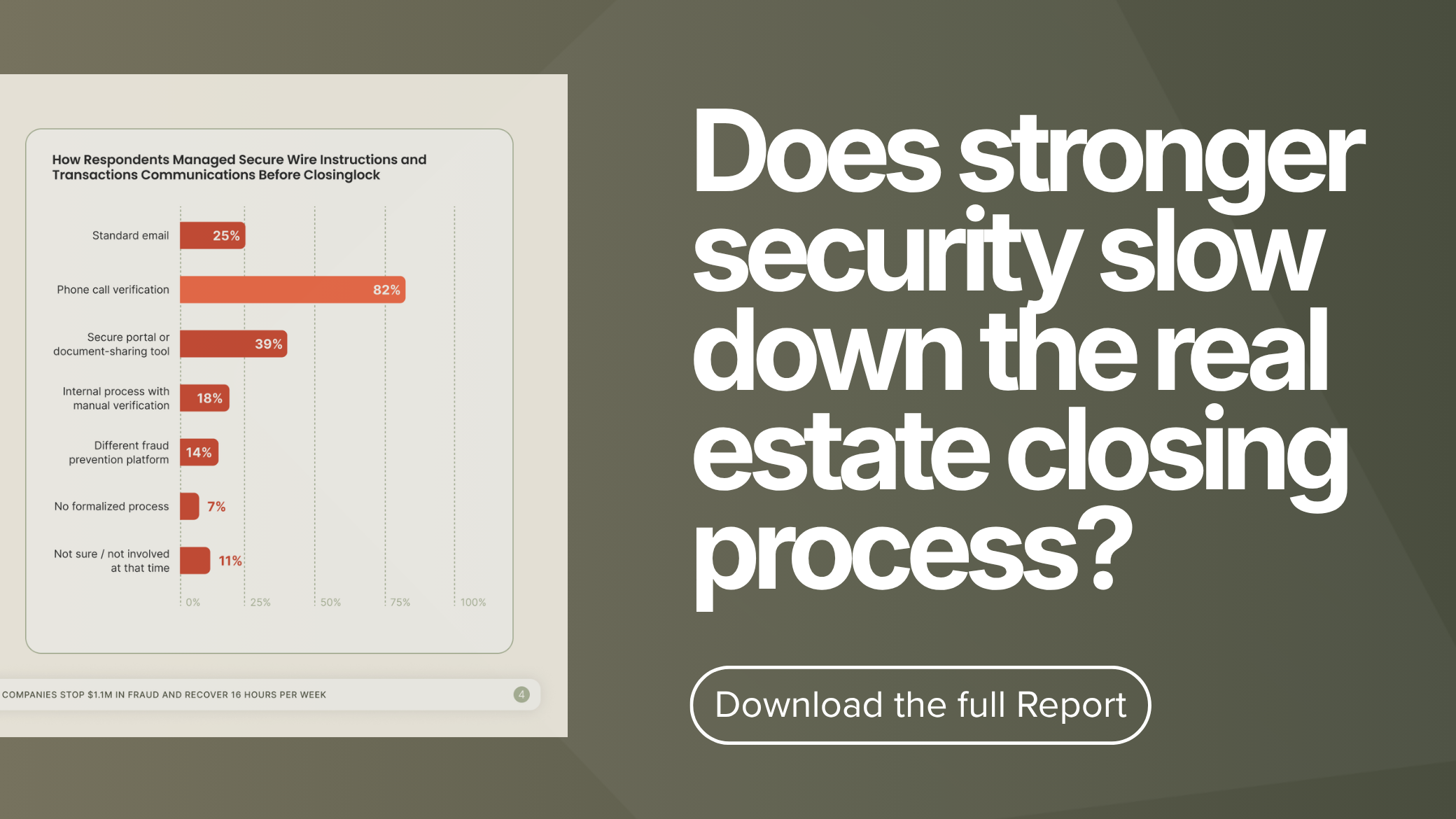
Title companies can reduce wire fraud risk by reducing reliance on email- and phone-based processes for sensitive information and building verification into the closing workflow before funds move.
Effective wire fraud prevention typically requires multiple layers of protection. That can include securely exchanging wire instructions, verifying the identities of transaction parties, confirming account information, and adding additional checks around high-risk payment events.
The goal is not simply to add more security steps. It’s to create a consistent process that makes it harder for fraudulent information to enter the transaction and easier for closing teams to verify that money is going where it should.
Closinglock brings these protections into one secure environment, helping title teams move critical verification steps out of fragmented emails, phone calls, and manual processes.
What does fraud prevention protect beyond the transaction?
Wire fraud prevention can be difficult to value when the outcome you want is for nothing to go wrong. But the financial exposure becomes clearer when you look at the transactions where suspected fraud is actually being stopped.
Closinglock customers reported stopping an average of three suspected or attempted fraud incidents each year, involving up to $1.1 million in transaction funds based on respondents’ average transaction value. The value extends beyond the money itself, with customers also reporting greater peace of mind, stronger secure practices, and increased client trust.
Closinglock’s new ROI research looks at how modern title, settlement, and real estate law firms are protecting transactions in 2026, including the financial, operational, and compliance impact of fraud prevention.
Download What protection is worth: The ROI of Closinglock
Get the research behind the results, or see how Closinglock can help your team protect transactions and reduce manual work.